
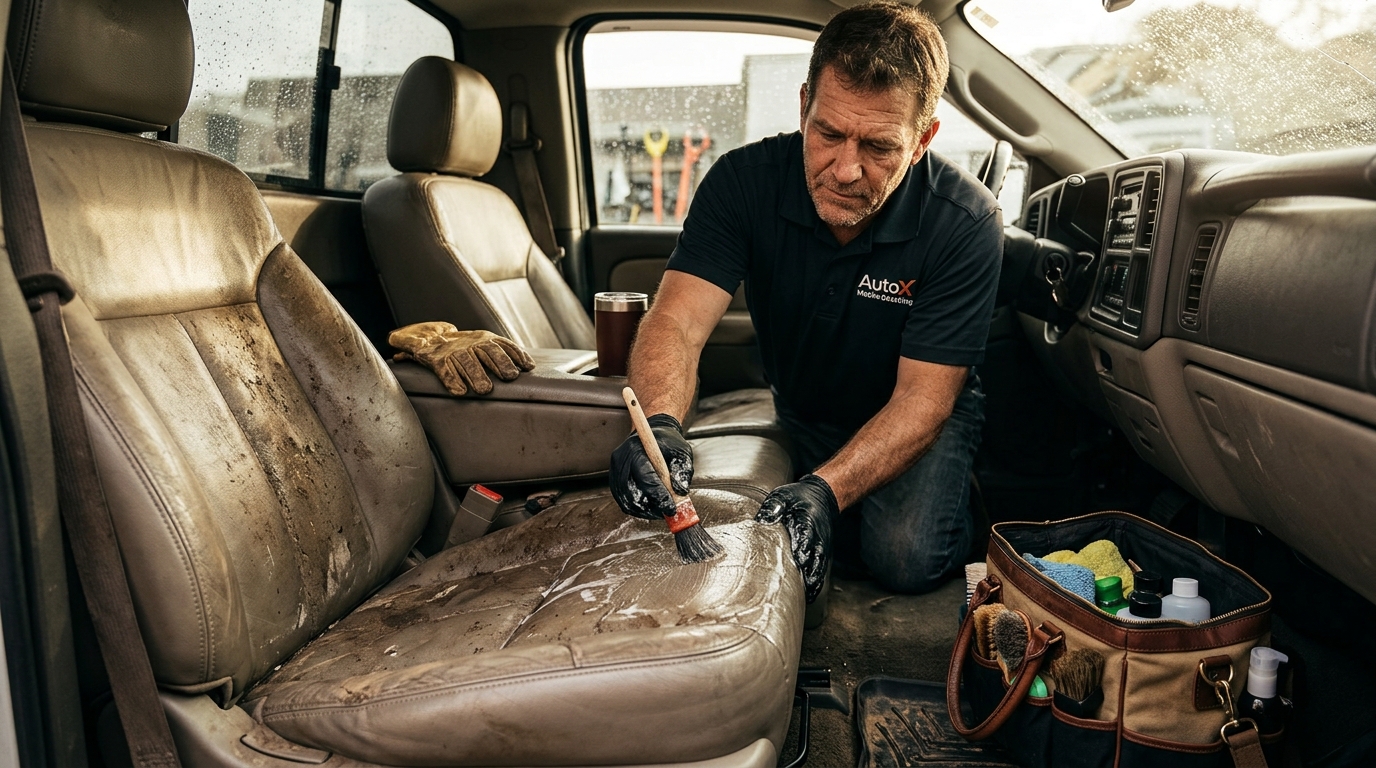
Leather seats in a work truck take a beating from sweat, mud, and daily use. A proper deep clean removes grime from the pores and restores the material's flexibility. This guide outlines the seven essential steps to bring your cabin back to life. For additional details, review the About AutoX Mobile Detailing.
1. Vacuum and Prep the Seats
Remove loose debris before applying any liquid. Start by vacuuming the seats thoroughly, including the crevices, seat rails, and under the cushions. Use a brush attachment to lift dust out of the stitching and seams. This prevents dirt from turning into mud when you add cleaning solution.
2. Apply a pH-Neutral Leather Cleaner
Use a dedicated cleaner, not household soap. Spray a pH-neutral leather cleaner onto a microfiber cloth, not directly onto the seat. Work in small sections to ensure even coverage. Avoid harsh chemicals that can strip the factory finish or dry out the material.
3. Agitate and Lift the Grime
Gently scrub to lift dirt from the pores. Use a soft-bristled brush or a damp microfiber towel to work the cleaner into the leather. Focus on high-contact areas like the bolsters and headrests. The goal is to lift embedded dirt without scratching the surface.
4. Wipe Down with a Damp Cloth
Remove all cleaner residue immediately. Use a clean, damp microfiber towel to wipe away the cleaner and the dirt it lifted. Repeat this step until the cloth comes away clean. Leaving residue behind can attract more dust and cause the leather to feel sticky.
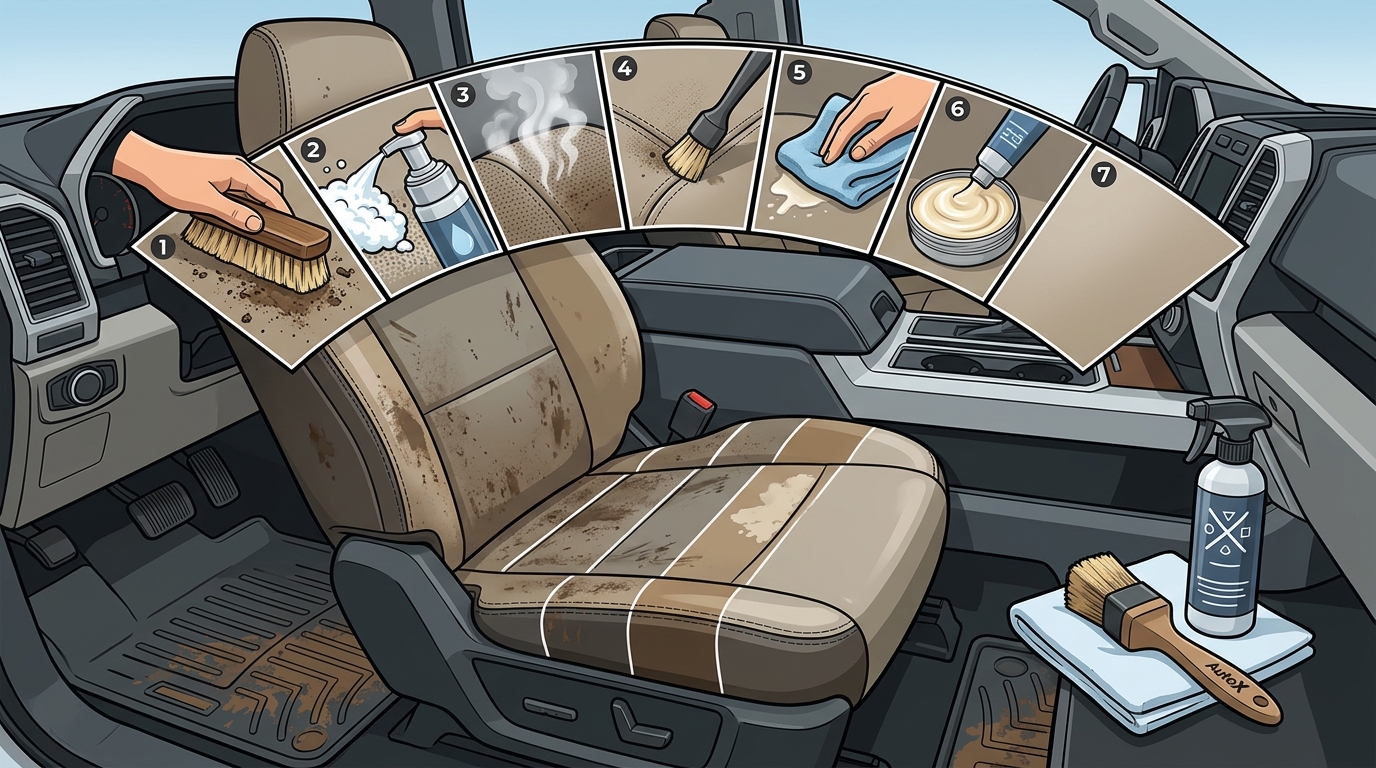
5. Inspect and Repeat as Needed
Check your work in natural light. Look for remaining stains or dull spots. If you see any, repeat the cleaning process on those specific areas. Work trucks often have heavy soiling, so multiple passes may be necessary for a truly deep clean.
6. Condition the Leather
Restore moisture to prevent cracking. Once the seats are completely dry, apply a high-quality leather conditioner. This step is critical for work trucks because the material dries out faster from heat and friction. Let the conditioner absorb fully before using the vehicle.
7. Protect and Maintain
Build a routine to keep the seats clean. Consider a protective spray that repels liquids and reduces staining. Regular maintenance, such as a quick wipe-down after heavy use, prevents the need for frequent deep cleans. For a professional result, interior detailing services can handle the heavy lifting for you.
Frequently Asked Questions
How often should I deep clean leather seats in a work truck?
For heavy daily use, a deep clean every three to six months is ideal. A quick wipe-down and vacuum should happen weekly to prevent buildup.
Can I use household cleaners on leather seats?
No. Household cleaners often contain harsh chemicals that can dry out and crack leather. Always use a pH-neutral product designed specifically for automotive leather.
What is the best tool for cleaning leather crevices?
A soft-bristled brush is the best tool for reaching into stitching and seams. It lifts dirt without scratching the surface.
Do I need to condition leather after every clean?
Yes. Cleaning removes natural oils, so conditioning is necessary to keep the leather supple and prevent cracking.
Can I do this myself or should I hire a pro?
You can do it yourself with the right products, but a professional detailer has the equipment and experience to handle heavy soiling and restore the finish. AutoX Mobile Detailing offers specialized interior services for work trucks.
Choosing the Right Approach
If your seats are only lightly soiled, a DIY approach with the steps above will work well. If you have heavy stains, cracked leather, or simply lack the time, professional detailing is the better investment. Contact AutoX Mobile Detailing to schedule a service that fits your truck's needs.