
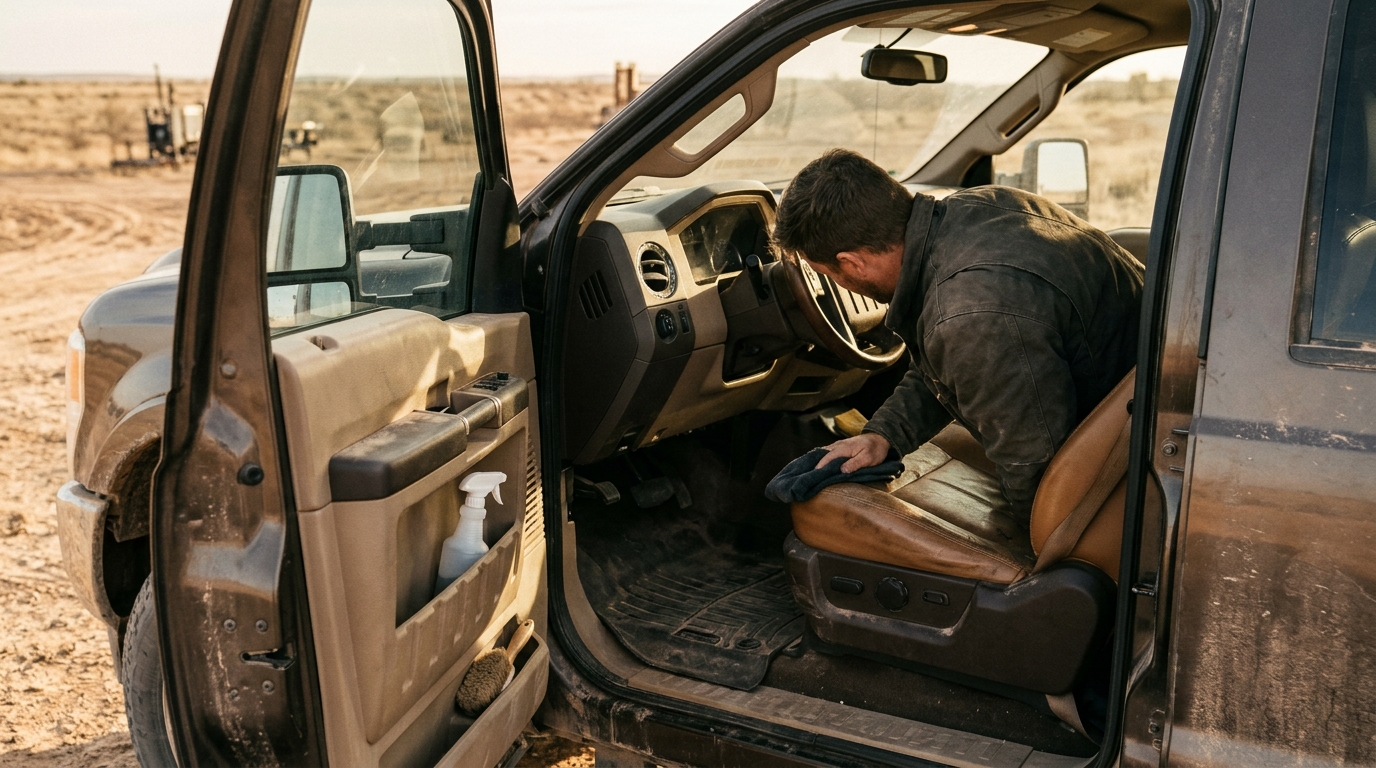
Leather seat cleaning is the process of removing dirt, oils, and alkaline dust from leather surfaces without stripping the material's natural moisture. In the Permian Basin, fine caliche dust and heavy use make this critical. The best method involves a pH-neutral cleaner, gentle agitation, and a dedicated conditioner to prevent cracking.
Why Work Trucks Need Special Care
Work trucks in Odessa face a unique environmental challenge. The local soil is rich in alkaline minerals, often referred to as caliche. This dust is not just gray; it is chemically active. When it settles into leather pores, it can dry out the material over time. Standard household cleaners often fail to remove this specific type of particulate matter effectively.
Leather is a porous material that breathes. When it absorbs alkaline dust, the pH balance of the surface shifts. This leads to a dry, brittle texture that eventually cracks. A work truck that sits in the sun for eight hours a day accelerates this process. The UV rays break down the collagen fibers in the leather, while the dust prevents the material from retaining moisture. This combination is the primary reason work truck interiors degrade faster than passenger cars.
Understanding this environment is the first step in proper care. You are not just cleaning dirt; you are neutralizing a chemical threat to the material. This perspective changes how you approach the cleaning frequency and the products you choose. It shifts the focus from aesthetics to preservation.
The Correct Cleaning Process
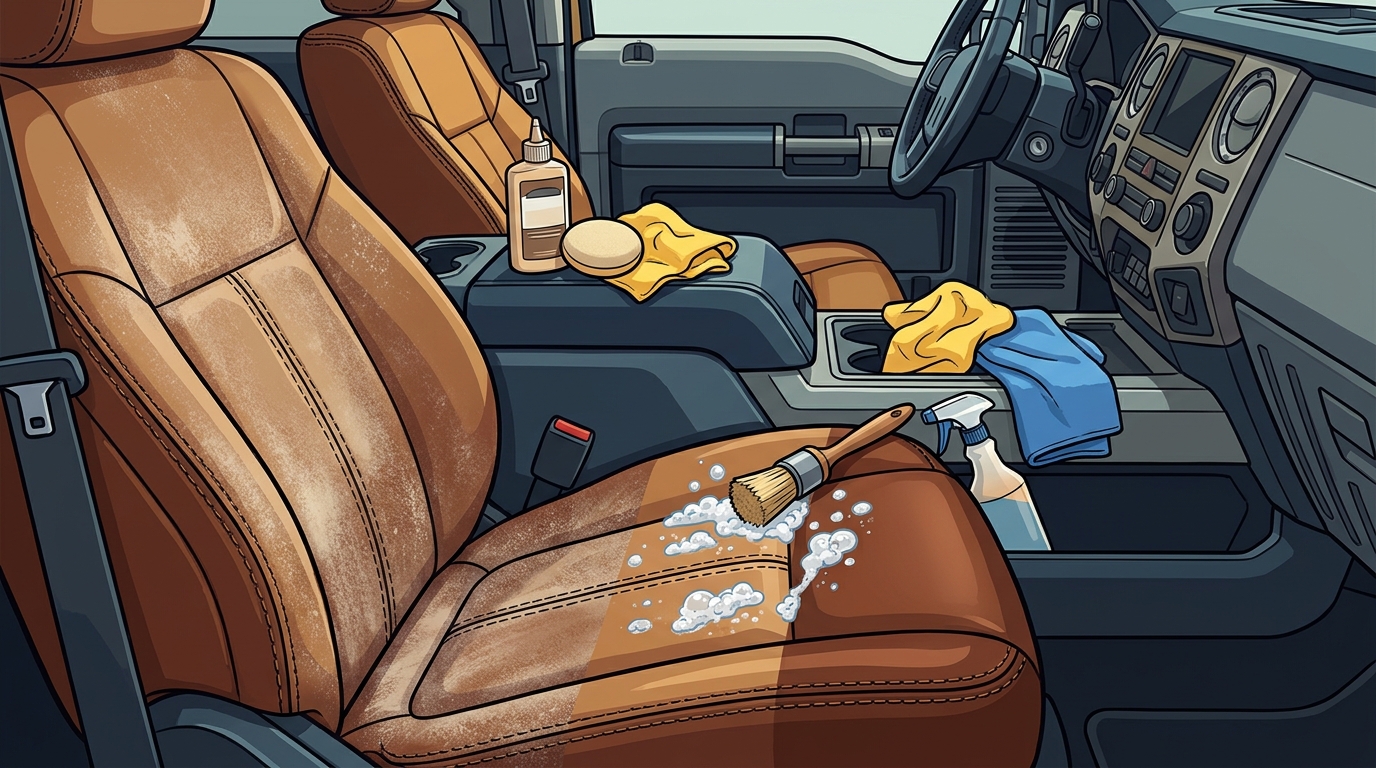
Leather cleaning is the removal of surface contaminants using a pH-neutral solution and soft tools. The goal is to lift dirt out of the pores without forcing it deeper. Start by vacuuming the seats thoroughly. Use a brush attachment to pull dust out of the seams and stitching. This step is non-negotiable. If you skip it, you will grind the dust into the leather during the wet cleaning phase.
Next, apply a pH-neutral leather cleaner to a microfiber cloth. Do not spray the cleaner directly onto the seat. This prevents over-saturation, which can damage the backing material. Work in small sections, using gentle circular motions. Let the cleaner dwell for a minute to loosen the grime. Then, wipe it away with a clean, damp cloth. Repeat this process until the cloth comes away clean.
For work trucks, pay extra attention to the seat rails and the areas where the driver sits. These spots accumulate the most sweat and oil. A dedicated leather cleaner is designed to cut through these oils without stripping the natural tannins. Avoid using all-purpose cleaners, as they often contain harsh solvents that dry out the leather. The result should be a surface that feels smooth and looks uniform, not shiny or sticky.
Conditioning for Long-Term Protection
Leather conditioning is the application of a moisturizing agent to restore flexibility and prevent cracking. After cleaning, the leather is stripped of some of its natural oils. This is the perfect time to condition. Choose a product that is specifically formulated for automotive leather. Many conditioners contain silicone, which creates a slick, greasy surface that attracts more dust. In a dusty environment like the Permian Basin, this is counterproductive.
Look for a conditioner that is water-based and free of silicone. These products penetrate the leather and hydrate it from within. Apply a thin, even layer using a clean microfiber cloth. Let it absorb for 15 to 20 minutes. Then, buff off any excess with a dry cloth. The leather should feel supple, not wet. A matte finish is ideal for work trucks, as it hides minor scratches and does not attract dust as aggressively as a high-gloss finish.
Conditioning is not a one-time event. It is a recurring maintenance task. For a work truck used daily, conditioning every three to four months is a good baseline. This keeps the leather flexible and resistant to cracking. If you notice the leather feeling stiff or looking dull, it is time to condition again. This proactive approach extends the life of the seats significantly.
Common Mistakes That Ruin Leather
Over-cleaning is another pitfall. Aggressive scrubbing can wear down the top layer of the leather, exposing the raw material underneath. This raw layer is more porous and absorbs dirt faster. Use gentle pressure and let the cleaner do the work. Finally, neglecting the seams is a frequent oversight. Dust collects in the stitching and the gaps between panels. If you do not clean these areas, the dirt will migrate back onto the main surface. A thorough cleaning includes the seams, the rails, and the headrests.
Professional Maintenance Options
While DIY cleaning is effective, professional detailing offers a deeper level of care. A professional detailer has access to specialized equipment and products that are not available to the general public. They can perform a deep extraction that removes embedded dust and oils from the leather backing. This is particularly useful for work trucks that have been neglected for a long time.
AutoX Mobile Detailing in Odessa specializes in this type of deep cleaning. Their team uses hot-water extraction and pH-balanced cleaners to restore leather to its original condition. They also apply a matte UV dressing that protects the leather from the intense Permian Basin sun. This service is part of their full interior detailing package, which is scheduled to fit around your work rotation. For a work truck, this level of care ensures that the seats remain functional and presentable for years.
Key Takeaways
- Leather cleaning is the process of removing alkaline dust and oils using pH-neutral products.
- Caliche dust in the Permian Basin is chemically active and can dry out leather if not removed.
- Always vacuum before wet cleaning to avoid grinding dust into the pores.
- Use silicone-free conditioners to prevent a greasy surface that attracts more dirt.
- Condition every three to four months to maintain flexibility and prevent cracking.
- Avoid household cleaners and hot water, as they can damage the leather structure.
- Professional detailing can provide a deeper clean and UV protection for work trucks.
Frequently Asked Questions
How often should I clean leather seats in a work truck?
For a work truck used daily in a dusty environment, a light clean every two to three weeks is recommended. A deeper clean with conditioning should be performed every three to four months. This frequency prevents dust from embedding into the leather pores.
Can I use household leather conditioner on my truck seats?
It is not recommended. Household conditioners are often too heavy and contain silicones that create a greasy surface. In a dusty environment, this attracts more dirt. Use an automotive-grade, silicone-free conditioner instead.
What is the best way to remove deep stains from leather?
For deep stains, use a dedicated leather stain remover. Apply it to a cloth and blot the stain, do not rub. If the stain persists, a professional detailer can use specialized extraction methods to remove it without damaging the leather.
Does leather need to be conditioned after every wash?
Yes, conditioning after every wash is best practice. Cleaning removes some of the natural oils from the leather. Conditioning restores these oils and keeps the material flexible. Skipping this step can lead to dryness and cracking over time.
How do I protect leather from the sun in Odessa?
Use a UV-protective conditioner or a dedicated UV dressing. These products create a barrier that blocks harmful rays. Parking in the shade or using a windshield cover can also help reduce heat exposure and prevent fading.
Is it worth getting professional detailing for work truck leather?
Yes, especially if the seats are heavily soiled. Professional detailers have equipment for deep extraction and access to high-quality products. They can restore the leather's appearance and add a protective layer that lasts longer than DIY methods.
Conclusion
Proper leather care is about consistency and using the right products for your environment. In the Permian Basin, the dust and sun are relentless, but they are manageable with the right approach. By understanding the chemistry of local dust and choosing silicone-free conditioners, you can keep your work truck seats looking and feeling great for years. If you want a deeper level of care, consider professional services. AutoX Mobile Detailing offers specialized interior services that address these specific challenges, ensuring your vehicle remains in top condition. Learn more: Contact AutoX Mobile Detailing.